
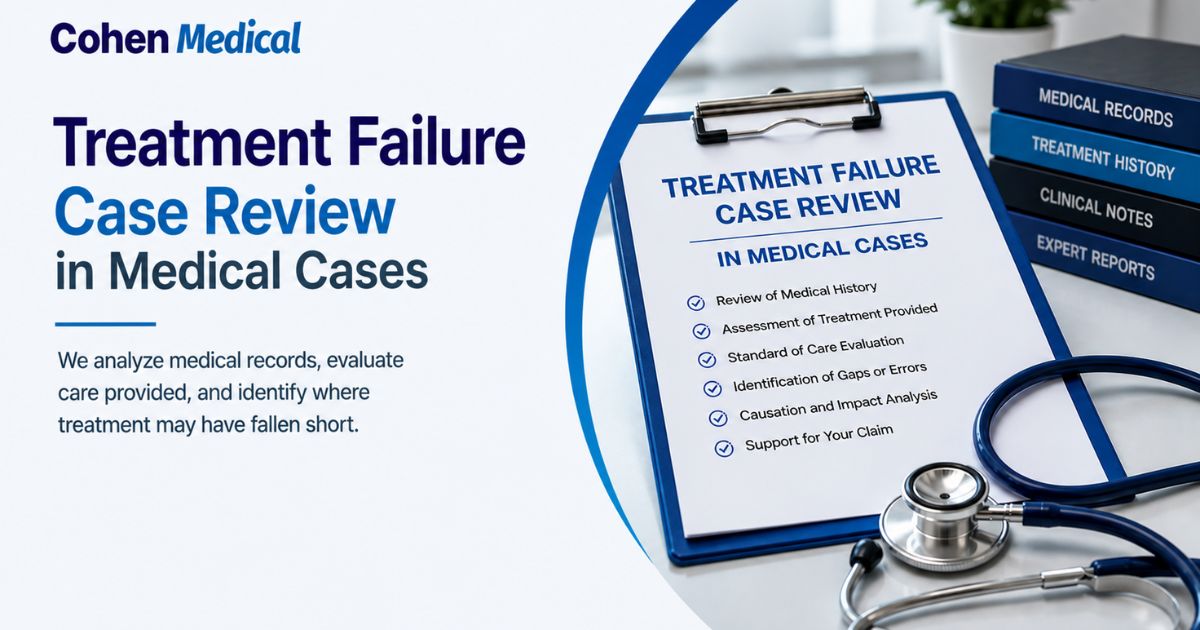
This blog explains how experts analyze treatment failure cases through structured medical record review, timeline mapping, clinical decision checks, and standard care comparison. It highlights how gaps in diagnosis, communication, and treatment are identified. The content shows how expert evaluation connects patient outcomes with medical actions, helping clarify complex healthcare cases using evidence-based analysis and clear reporting methods.
A patient harm case analysis is a structured way to study what went wrong during medical care. In many situations, families and legal teams need clarity on whether a treatment followed proper medical standards or not. This process is often used in complex cases where outcomes do not match expected recovery. A clear review helps separate unavoidable medical risk from possible mistakes. It also supports fair evaluation of records, reports, and clinical decisions. Experts involved in this work focus on facts, not opinions. They study documents such as hospital notes, test results, prescriptions, and surgical records. The aim is to understand the full medical picture step by step. This helps identify gaps in care, delays in response, or incorrect treatment paths that may have affected patient health.
The first stage of analysis begins with gathering all relevant medical documents. Experts carefully arrange hospital files, diagnostic scans, medication charts, and discharge summaries. Each document is checked for clarity and timeline order.
This step is important because missing or incomplete data can change how a case is understood. Experts also check if records match across different sources. For example, a medication given in a hospital should match the prescription notes. Any mismatch is flagged for deeper review later.
Simple sorting helps build a clear timeline of events. This timeline becomes the base for all further evaluation.
After organizing records, experts study medical decisions taken during treatment. This includes diagnosis, tests ordered, medicines prescribed, and procedures performed.
Each decision is compared with accepted medical standards. Experts look at whether symptoms were correctly interpreted and whether tests were ordered at the right time. Delays or incorrect choices are carefully noted.
Even small differences in timing can change patient outcomes. That is why this step requires close attention. The goal is not to judge quickly but to understand whether care followed proper clinical logic.
A key part of the review involves finding gaps in treatment flow. These gaps may include delayed diagnosis, missed warning signs, or incorrect follow-up care.
Experts map each stage of patient care from admission to discharge. They check if the communication between the medical staff was clear. They also see whether test results were reviewed on time.
Sometimes, gaps occur due to a lack of coordination between departments. In other cases, important symptoms may not be recorded properly. These details are carefully highlighted during analysis.
Once gaps are identified, experts compare the case with standard medical guidelines. These guidelines are based on widely accepted clinical practices used by healthcare professionals.
This step helps determine whether the care provided was reasonable under normal conditions. If treatment differs from standard practice without a valid reason, it may require deeper attention.
Experts rely on structured medical knowledge rather than assumptions. This ensures that conclusions are based on evidence and not personal opinion.
After reviewing care and standards, experts study how treatment actions affected the patient’s condition. This step connects medical decisions with final outcomes.
They check whether delays or incorrect choices contributed to harm. They also consider whether the outcome could have been different with proper care.
Not every poor outcome means an error occurred. Some conditions progress despite correct treatment. Experts carefully separate natural medical risks from avoidable issues.
It includes a timeline, medical observations, standard comparisons, and a final opinion. The goal is clarity so that legal teams or families can understand the medical facts easily.
Reports avoid complex medical jargon as much as possible. They are written in a way that supports informed decision-making.
Medical cases often involve many layers of information. Without expert review, important details may be missed or misunderstood. A structured analysis helps bring clarity.
It supports fair evaluation of care quality and helps identify whether proper steps were followed. This process is especially important in cases involving serious patient outcomes or unclear treatment paths.
A treatment failure case review provides structured insight into medical care decisions and outcomes. It helps identify whether care followed expected standards or where gaps may have occurred. This process supports a clear understanding of complex medical situations through factual evaluation and structured reporting. At Cohen Medical, led by Dr. Michael Cohen, our focus is to provide detailed and unbiased medical support through expert-level analysis. Our work in treatment failure case review helps attorneys, families, and care teams understand medical facts with clarity and confidence. We ensure every review is handled with care, accuracy, and strong medical reasoning. This strengthens the value of every treatment failure case review we conduct.
It is a structured medical analysis that evaluates patient records to understand whether the treatment followed proper clinical standards or showed possible errors.
Experts begin by collecting and organizing all medical records, including reports, prescriptions, scans, and hospital notes, in chronological order.
A timeline helps connect symptoms, diagnosis, and treatment steps to identify delays, gaps, or incorrect medical decisions clearly.
No, not all poor outcomes indicate errors. Experts differentiate between natural medical risks and avoidable clinical mistakes using an evidence-based review.
Medical documentation provides essential evidence to verify treatment steps, decisions, and communication between healthcare providers during patient care.
Cohen Medical Legal delivers trusted medical-legal consulting, expert case evaluations, and evidence-based analysis, helping attorneys and clients navigate complex healthcare-related legal matters with confidence.