
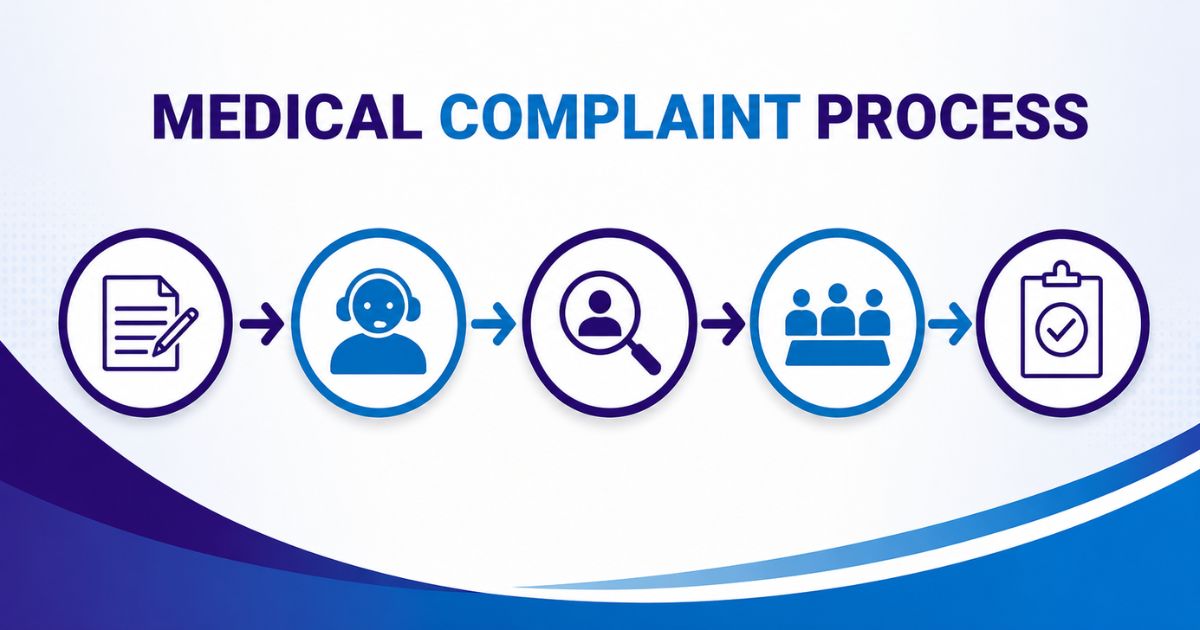
Summary: This comprehensive guide breaks down the investigation lifecycle after filing a healthcare complaint. It details preliminary screening, medical record analysis, expert reviews, and provider responses. By explaining these stages simply, the guide helps patients and attorneys understand how medical consulting uncovers deviances in care standards to build strong legal cases.
The single biggest mistake people make after suffering from a medical error is assuming that a hospital or licensing board will automatically take their side just because they filed a report. Filing a report is only the opening whistle of a long, intricate match. You expect immediate action, but the system moves with a slow, bureaucratic rhythm that catches many off guard.
Understanding the medical complaint process helps you regain control over a confusing situation. This journey involves multiple steps, transforming your initial report into a structured investigation. We break down each stage so you know exactly what to expect next, helping you navigate the system with clarity and calm confidence.
The first stage is preliminary screening. Administrative staff check if your complaint meets specific legal and jurisdictional criteria. They do not look at medical care yet; they simply ensure the paperwork matches their internal rules. This phase is purely about technical compliance rather than clinical truth.
If your submission lacks specific dates or clear names, the board may dismiss it immediately. This stage acts as a strict gatekeeper. Many valid complaints stop here simply due to minor clerical errors or incomplete information forms. It feels clinical and cold, but it is just how the machinery operates.
When a submission arrives, clerks check if the practitioner holds a valid license in that specific state. They verify if the event occurred within the legal time limits, known as the statute of limitations. If the paperwork fails these basic hurdles, the file closes before a doctor ever reads it.
This initial rejection leaves many families feeling abandoned and unheard. They mistake an administrative dismissal for a judgment on their actual medical care. In reality, the board simply rejected the format of the paperwork, not the truth of the injury itself.
To survive this first cut, your documentation must be precise, orderly, and complete. Missing signatures or vague timelines invite instant rejection. Think of this step as checking tickets at the theater door; if your ticket is wrong, you never get to see the show.
Once your case passes the gatekeeper, investigators gather your complete medical history. This step forms the foundation of the entire investigation. Investigators request everything from doctor notes, nursing logs, lab results, to internal hospital communication. This paper trail holds the real story of your treatment.
Medical records often hold the hidden truth of what went wrong during your treatment. However, these documents are highly technical, packed with complex jargon, and frequently span thousands of pages. Parsing through them requires a trained eye. A single line in a nursing note can change everything.
[Clinical Chart Archive]
└── Physician Orders
└── Nursing Progress Notes
└── Lab & Imaging Biomarkers
└── Electronic Health Record (EHR) Metadata Audit Trails
Hospitals often send massive, unorganized stacks of paper to confuse outsiders. They mix up pages, separate related test results, and use abbreviations that sound like a foreign language. Without a professional guide, finding the critical error feels like looking for a needle in a dark haystack.
Furthermore, electronic health records contain hidden data called audit trails. These trails show exactly when a doctor viewed a lab result or modified a clinical note. If a practitioner tries to alter a record after an error occurs, the electronic history leaves a permanent digital footprint.
Gathering these files takes time, often stretching across several weeks or even months. Regulatory bodies must give hospitals legal deadlines to comply with records requests. While you wait, the investigation remains in a quiet holding pattern, building the database necessary for a deep clinical review.
This phase of the medical complaint process involves the formal clinical evaluation of your retrieved files. A specialist reviews the timeline of your care to see where things went off course. They compare the actions taken by your doctor against established medical guidelines. This comparison reveals whether the care was acceptable or negligent.
| Investigation Stage | Who Handles It? | What is the Main Objective? |
| 1. Screening | Administrative Staff | To verify jurisdiction and complete paperwork. |
| 2. Record Review | Medical Consultants | To analyze clinical charts for deviations. |
| 3. Provider Reply | Accused Practitioner | To submit a formal defense of their actions. |
| 4. Final Decision | Licensing Board/Panel | To determine disciplinary action or case closure. |
Our expert analysis helps translate these dense charts into clear answers for individuals and law firms alike. We find the missing pieces that prove a deviation in standard care occurred. This distinct insight gives your case real substance. We convert complex charts into simple, undeniable facts.
Medical experts look for a concept called the standard of care. This term represents what a reasonably competent doctor would have done under similar circumstances. If your physician chose a reckless path that deviated from this standard, negligence becomes clear and measurable.
Our consulting services highlight these specific deviations for attorneys planning lawsuits. We slice through the medical smoke and mirrors to show exactly where the physician failed their patient. This independent review turns raw confusion into a powerful tool for justice.
Investigators do not look at your case in a vacuum. They send your complaint to the accused healthcare professional, giving them a formal opportunity to respond. The doctor or hospital then submits their own detailed explanation of the events, offering their perspective on the care provided.
Practitioners usually hire specialized legal teams to draft these responses. They will defend their decisions, arguing that the bad outcome was an unavoidable complication rather than negligence. Reading this defense can be emotionally difficult for families. The provider will often paint a very different picture.
The doctor’s response often relies on clinical grey areas to justify their choices. They might argue that your pre-existing conditions made a ideal outcome impossible. Their legal team uses complex terminology to minimize the appearance of fault and protect the provider’s professional reputation.
This phase of the medical complaint process operates like a written debate. The board evaluates your claims against the doctor’s defense. If you lack an expert medical review to counter their technical arguments, the board may find the doctor’s explanation perfectly reasonable and close the file.
Understanding this dynamic prevents you from being blindsided by the provider’s denials. A medical error case is rarely an open-and-shut matter; it is a battle of interpretations. Having an experienced consultant on your side ensures that technical misdirections are exposed and corrected.
The review board weighs your medical evidence against the provider’s defense to make a final decision. They determine if the practitioner violated public safety laws or standard care guidelines. This evaluation decides the ultimate outcome of your complaint, bringing the administrative process to a close.
Navigating the aftermath of a medical error can feel like walking through a maze in the dark. The systems designed to protect patients often feel distant, complex, and overwhelmingly bureaucratic. Knowledge is your best weapon and your clearest shield during this challenging period.
By understanding each milestone of the investigation, you can participate actively rather than waiting powerlessly for answers. Whether you are an individual seeking truth or an attorney building a strategy, the right support transforms the entire trajectory of your journey.
For a deeper look into official clinical evaluation guidelines, you can reference this comprehensive Federation of State Medical Boards Guide. This document provides deeper context on how regulators view professional accountability.
If you feel overwhelmed by a healthcare error, you do not have to seek answers alone. Dr. Cohen from Cohen Medical Consulting provides the independent medical reviews and clear insights you need to understand your options and strengthen your case. Please visit Cohen Medical Consulting to schedule your professional consultation today.
Most medical complaint investigations take between six months and more than a year. The exact timeline depends on case complexity, record volume, and response times from healthcare providers.
No. Medical boards focus on regulating and disciplining healthcare professionals to protect public safety. Financial compensation typically requires a separate civil medical malpractice lawsuit.
Medical records often contain complex clinical language and technical details. An independent expert review helps identify potential care standard issues and provides a clearer understanding of the case.
A dismissal generally means the board did not find enough evidence of a regulatory violation. Individuals may still explore other legal options with qualified legal counsel.
Healthcare facilities are generally required to provide relevant records during authorized investigations. Reviewing these records carefully helps ensure important information is properly documented and evaluated.
Cohen Medical Legal delivers trusted medical-legal consulting, expert case evaluations, and evidence-based analysis, helping attorneys and clients navigate complex healthcare-related legal matters with confidence.