
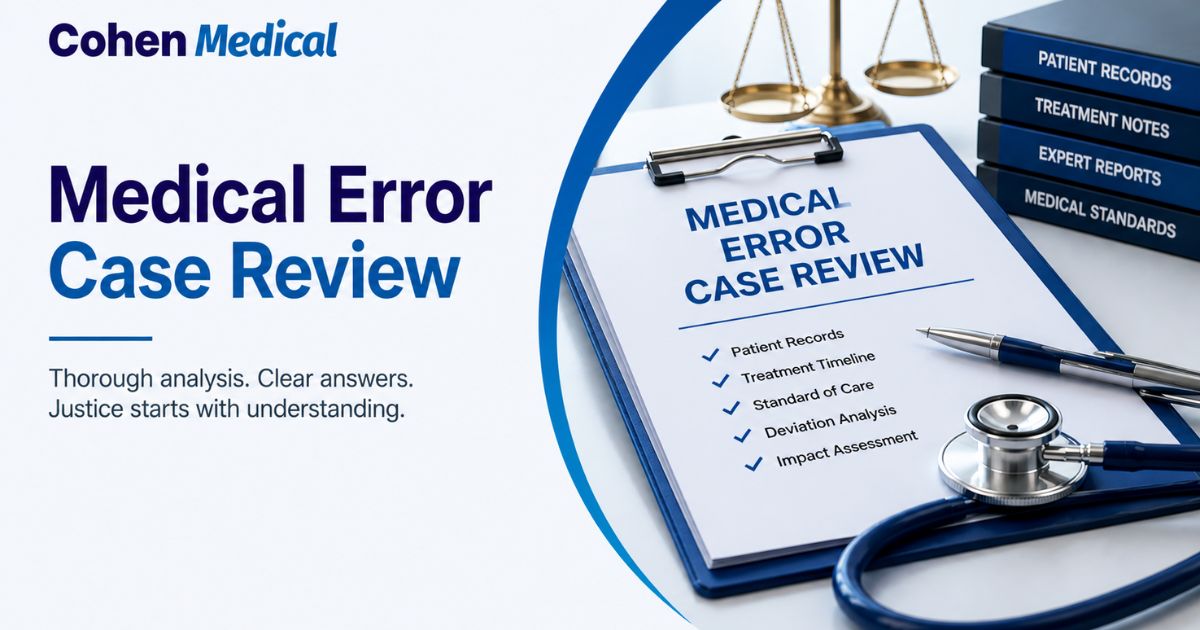
This guide explains how to identify medical faults in case analysis through a structured review of records, clinical evaluation, and documentation checks. It covers error patterns, treatment gaps, and reporting standards used in legal-medical assessments. The content helps understand how experts evaluate mistakes and support stronger case outcomes using clear medical reasoning and evidence-based review methods.
A clear medical error case review helps break down clinical events and highlights where care did not meet accepted medical standards. This guide explains how structured case analysis helps identify medical fault in a simple and practical way for legal and clinical understanding. A proper review does not depend on one document or one opinion. It depends on a full study of all medical records, reports, and treatment details from start to end of care.
The first step in case analysis is arranging all medical events in order. This includes hospital admission notes, test results, treatment plans, surgery notes, and discharge summaries. A structured timeline helps reveal gaps, delays, or missing actions that may point toward a problem in care delivery. Without a clear sequence, important details may stay hidden.
A complete timeline also helps connect symptoms with actions taken by healthcare providers. It becomes easier to see if there were delays in diagnosis or treatment. Even small time gaps between symptom reporting and medical response can change outcomes. This step is often the base for the entire case review because it organizes scattered information into a clear story.
Every medical action must follow accepted standards of care. In this step, clinical decisions are reviewed against established medical practices. This includes checking whether the correct tests were ordered, proper treatment was given, and timely action was taken. Any mismatch between expected care and actual care may indicate possible fault.
Clinical decisions are also evaluated based on the patient’s condition at that time. A treatment that may be correct for one condition may not be suitable for another. This makes it important to review not only what was done, but also why it was done. Proper analysis helps identify whether the decision-making process followed medical logic or missed key warning signs.
Misdiagnosis is one of the most common concerns in case analysis. This step focuses on whether symptoms were correctly interpreted and whether appropriate diagnostic tools were used. Reviewing lab reports, imaging results, and physician notes helps determine if early warning signs were missed or misunderstood.
Diagnostic accuracy also includes checking repeated visits or ongoing complaints. If a patient returns with similar symptoms and no new investigation is done, it may indicate a gap in diagnosis. Proper diagnosis is often the foundation of correct treatment, so even small errors at this stage can have major effects later.
Treatment review focuses on medication, procedures, and patient management. The goal is to see if the treatment plan followed accepted medical guidelines. Errors may appear in wrong dosage, delayed intervention, or unsuitable treatment choices. Each detail is checked to understand its impact on patient outcome.
This step also looks at whether treatment changes were made appropriately. If a patient does not respond to treatment, doctors are expected to adjust the plan. Failure to modify treatment can lead to worsening health conditions. A structured review ensures that all treatment decisions are measured against expected medical behavior.
Medical protocols act as a benchmark for safe care. This step compares the actual treatment with standard clinical guidelines. It helps identify deviations that may not be obvious in regular review. Even small differences from standard care can have serious effects on patient recovery.
These protocols are based on medical research and clinical experience. They guide doctors on how to handle specific conditions. When care does not follow these standards, it becomes important to understand whether the deviation was justified or an oversight. This step brings clarity to that comparison.
Clear communication between doctors, nurses, and medical teams is essential. This step checks whether critical information was shared properly. Missing or unclear communication can lead to incorrect treatment decisions or delays in care. These gaps often play a key role in case findings.
Communication also includes patient interaction. If patients are not informed about risks or symptoms are not properly documented, important details may be lost. Good communication ensures continuity of care. Any break in this chain can directly affect patient safety and treatment success.
Every medical action must be assessed based on its outcome. This step reviews how the patient’s health changed due to treatment decisions. Worsening conditions, complications, or prolonged recovery may indicate underlying issues in care quality. The focus is on linking actions with results.
Patient impact analysis also considers long-term effects. Some medical errors do not show immediate harm but may lead to future health problems. Understanding both short-term and long-term outcomes helps create a complete picture of care quality and decision accuracy.
Once all details are reviewed, findings are organized into a structured report. This includes clear points on medical events, deviations, and clinical observations. A well-prepared report helps legal teams and healthcare professionals understand the full picture without confusion.
Structured findings also ensure that no detail is lost. Each section of the review supports the final conclusion. This makes the report useful for legal review, expert consultation, and further case development. Clear documentation is key to reliable analysis.
Medical records often contain complex language and technical data. Expert interpretation helps simplify this information into clear insights. This step ensures that no important detail is missed and that conclusions are based on accurate medical understanding.
Experts also help identify patterns that may not be visible in raw records. Their experience allows them to connect clinical events with medical standards. This improves the quality and reliability of the entire case review process.
A complete review process helps bring clarity to complex medical situations. It allows a structured approach to identify errors, delays, or deviations that may affect patient outcomes. Careful examination of each stage ensures balanced and fact-based conclusions supported by clinical standards. At this stage, a medical fault case analysis becomes more reliable when reviewed with expert support. Cohen Medical, led by Dr. Michael Cohen, provides a detailed evaluation of medical records for patients, attorneys, and legal teams. Our approach focuses on clear, structured, and medically accurate reviews that support informed decision-making. For professional assistance and case review support, reach out to our team today.
Medical fault refers to errors in diagnosis, treatment, or patient care identified through a structured review of medical records and clinical evidence in a case analysis process.
It is identified by comparing medical records, treatment steps, and accepted clinical standards to detect gaps, delays, or incorrect decisions affecting patient care outcomes.
It helps clarify whether medical actions followed standard procedures and highlights possible errors that may influence legal or clinical evaluations.
Qualified medical experts review these cases by analyzing records, timelines, treatment decisions, and clinical protocols to determine possible deviations from standard care.
Medical records provide key evidence, but expert interpretation is needed to confirm whether actions meet or fall below accepted medical standards.
Cohen Medical Legal delivers trusted medical-legal consulting, expert case evaluations, and evidence-based analysis, helping attorneys and clients navigate complex healthcare-related legal matters with confidence.