
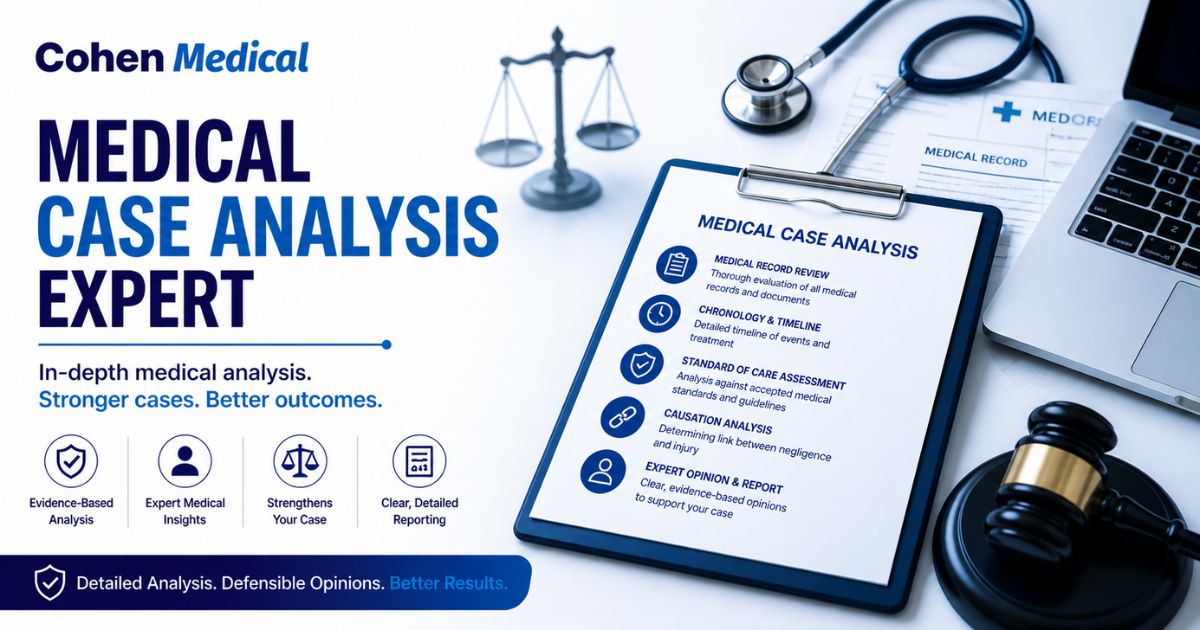
Medical case analysis experts help simplify complex hospital records into clear timelines, identify gaps in documentation, and compare treatment with medical standards. The blog explains how structured review supports legal case preparation, improves understanding of clinical decisions, and reduces misinterpretation. It shows how organized medical insight strengthens the evaluation of patient care and supports accurate case assessment.
Medical files are often long, technical, and fragmented across departments. Notes from doctors, nurses, labs, and discharge teams do not always match in tone or detail. A medical case review specialist helps convert this scattered information into a clear, connected story that reflects what actually happened during patient care. This step is critical because raw records alone rarely explain the full situation in a usable form for legal evaluation. In many cases, records may include repeated entries, unclear handwriting notes, or missing explanations for key decisions. Without proper review, important details can be missed or misunderstood, which may weaken the overall understanding of the case.
Hospital documentation is not written for legal review. Entries may appear out of order, with repeated updates and missing context. A structured review rebuilds the entire sequence, from first complaint to final outcome. This allows legal teams to see how care progressed step by step, including delays, repeated tests, or sudden changes in treatment direction that might otherwise be overlooked. By organizing the timeline clearly, it becomes easier to understand how each medical decision connects to the next stage of care. This also helps identify gaps between observations and actions, which are often important in case evaluation.
Medical decisions are often made under pressure, but documentation may not always clearly explain why certain choices were taken. A detailed review highlights areas such as unclear diagnosis steps, delayed responses, inconsistent treatment patterns, or incomplete documentation of reasoning. These findings help legal teams identify points that may require further clarification from a medical standpoint. Sometimes, a treatment plan may change quickly without a clear explanation in the records. A structured review helps bring attention to these areas so they can be properly understood in context.
Every medical condition has expected care guidelines. A structured review compares actual treatment actions with these standards. This includes checking whether diagnosis steps were followed correctly, whether tests were ordered on time, and whether treatment matched patient symptoms. This comparison helps identify whether care stayed within expected medical practice or showed irregular patterns. It also helps highlight situations where care decisions may have been delayed or not aligned with standard medical procedures, making the case easier to assess with clear reference points.
One of the most complex parts of a legal medical case is connecting treatment actions to patient outcomes. A review focuses on separating natural medical risks from potential care-related issues. This requires careful reading of progression notes, lab changes, and response to treatment. The goal is to determine whether outcomes were expected or influenced by clinical decisions. This step is important because not all negative outcomes are caused by errors, and proper analysis helps avoid incorrect assumptions. Clear interpretation supports fair and balanced case understanding.
Medical records contain abbreviations, shorthand notes, and clinical terms that can easily be misread. A structured review translates this into clear language without losing meaning. This ensures that legal professionals can focus on facts instead of decoding medical terminology. It also reduces the risk of misunderstanding key points in the case file. For example, short medical notes written during emergencies may look confusing without proper explanation. A clear review makes these entries easier to understand and connect with the overall case timeline.
Incomplete records can affect case clarity. Missing consent notes, unclear diagnosis explanations, or absent follow-up details can change how a case is viewed. A detailed review identifies these gaps early, helping legal teams understand where documentation is strong and where clarification may be required. This step is important because missing information can sometimes change the interpretation of care quality. Identifying these gaps early also helps in preparing better questions and improving case readiness.
A well-prepared case depends on clarity, not volume of documents. A structured medical analysis organizes all findings into usable insights, making it easier for legal professionals to build arguments, ask the right questions, and prepare for case discussions. This reduces confusion and improves overall case direction. Instead of reading hundreds of pages of raw records, legal teams can work with a clear summary that highlights important medical events and decisions. This improves efficiency and supports stronger preparation.
A strong legal medical case depends on accurate interpretation of clinical facts, not just access to records. A medical case analysis expert helps transform complex hospital documentation into structured, clear, and usable insights that support legal evaluation. At Cohen Medical, led by Dr. Michael Cohen, we focus on detailed review of medical records, careful identification of clinical patterns, and structured analysis that helps bring clarity to complex healthcare cases.
Our approach supports both legal professionals and case reviewers by turning complex medical information into clear, understandable insights that can be used with confidence.
A medical case analysis expert reviews hospital records, organizes clinical information, and highlights important findings. This helps legal teams understand patient care details clearly and supports structured case evaluation.
Medical record review helps convert complex hospital notes into clear timelines. It reduces confusion and supports better understanding of treatment decisions and patient outcomes in legal cases.
Yes, medical records often include technical terms, abbreviations, and incomplete notes. A professional review helps translate this into simple and clear information for legal understanding.
Case analysis compares medical actions with standard care guidelines. It helps identify delays, inconsistencies, or gaps in treatment decisions for better case clarity.
Legal professionals, attorneys, and case reviewers benefit by gaining clear medical insights that support case preparation and structured evaluation of healthcare records.
Cohen Medical Legal delivers trusted medical-legal consulting, expert case evaluations, and evidence-based analysis, helping attorneys and clients navigate complex healthcare-related legal matters with confidence.